How PT-141 works comes down to one key difference from most sexual wellness treatments: instead of targeting blood vessels or genital tissue directly, this peptide activates specific receptors inside the brain. PT-141, known clinically as bremelanotide, binds to melanocortin receptors that regulate desire, arousal, and related autonomic responses. That central mechanism is why providers consider it for both men and women whose low libido has not fully responded to treatments aimed only at physical blood flow, and it is why understanding brain pathways and libido matters as much as understanding anatomy.
How PT-141 Works Through Melanocortin Receptors
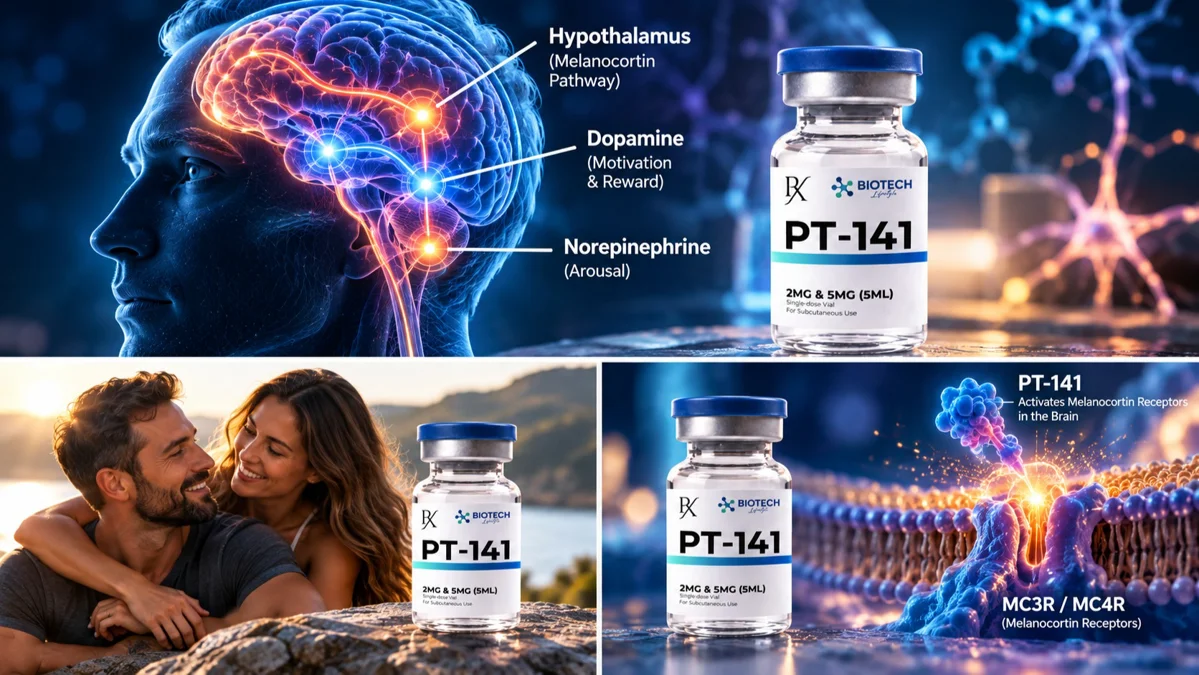
Melanocortin receptors are a family of five receptor subtypes, labeled MC1R through MC5R, found throughout the body but concentrated in the brain. PT-141 bremelanotide binds to several of these subtypes, with a particular affinity for the MC4R receptor located in the hypothalamus. Once PT-141 attaches to MC4R, it triggers a chain reaction inside the cell: an enzyme called adenylyl cyclase increases cyclic AMP, which activates protein kinase A and eventually influences gene expression through transcription factors like CREB.
The practical takeaway is simple even though the biochemistry sounds complex. Because PT-141 works at the receptor level in the brain rather than at the blood vessel level, its effects are tied to how your nervous system generates desire and arousal signals, not just how blood moves through tissue. This is the core reason peptide therapy for sexual function is discussed as a distinct category from medications that work locally.

Brain Pathways Behind Libido and Arousal
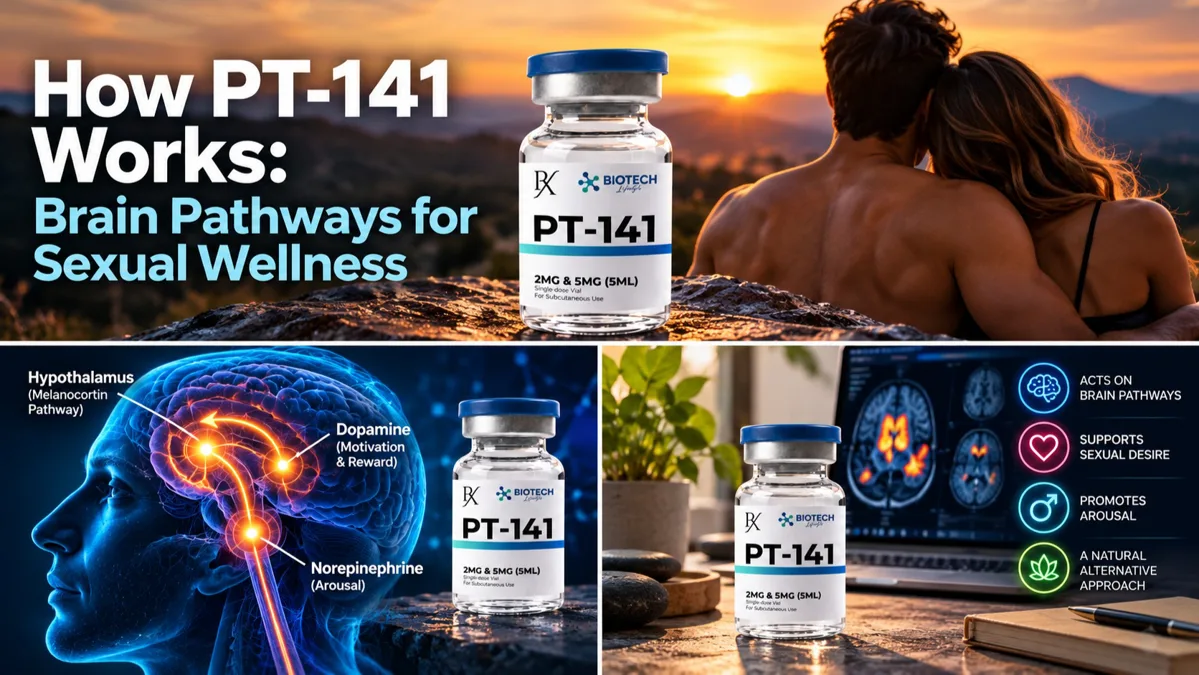
The hypothalamus acts as a control center for many automatic body functions, and its paraventricular nucleus contains a dense cluster of MC4R receptors. When PT-141 activates these receptors, it influences neuronal signaling that travels down through the brainstem and into the spinal cord, eventually reaching the autonomic nervous system pathways connected to sexual response.
Brainstem regions such as the nucleus tractus solitarius also contain melanocortin receptors, and these areas additionally play a role in cardiovascular regulation. This overlap between sexual and autonomic pathways helps explain why PT-141 can influence heart rate or blood pressure slightly in some people, alongside its intended effects on desire. The timeline of response has two parts: some signaling changes occur within minutes to hours, while other effects tied to gene expression build more gradually with continued, provider-guided use.
PT-141 Bremelanotide Compared to Other Sexual Wellness Options
Because PT-141 works so differently from other approaches, it helps to see it next to the other main categories of treatment side by side. None of these options is universally better; the right choice depends on your history, symptoms, and what a licensed provider recommends after evaluation.
| Approach | How it works | Who might consider it | Typical administration |
|---|---|---|---|
| PT-141 (bremelanotide) | Activates melanocortin receptors, especially MC4R, in brain pathways tied to desire and arousal | Men and women with low libido or arousal difficulty not fully addressed by other options | Subcutaneous injection, timed before intimacy |
| Oral ED medications (PDE5 inhibitors) | Relax smooth muscle to increase blood flow to genital tissue | Men whose primary concern is erectile firmness with normal desire | Oral tablet, taken before activity |
| Testosterone therapy | Restores hormone levels that influence desire, energy, and tissue health | Men and women with clinically low testosterone contributing to low libido | Injections, patches, or topical applications under provider guidance |
Some patients use PT-141 on its own, while others combine it with hormone optimization once a provider has reviewed labs and health history. The comparison above is meant to clarify mechanism, not to suggest one option replaces medical evaluation.
Why This Peptide Therapy May Support Both Men and Women
Unlike treatments designed around a single sex, how PT-141 works reflects brain pathways that exist in both male and female physiology. The melanocortin receptors it targets govern desire and arousal through similar central mechanisms regardless of biological sex, which is part of why bremelanotide has been studied for hypoactive sexual desire disorder in women as well as for low libido and erectile concerns in men.
For women, hormonal shifts, stress, and certain medications can dampen the brain signals that initiate desire before any physical stimulation begins, and a central mechanism like this one may address that gap. For men, particularly those who have tried other erectile dysfunction options without a complete solution, addressing the desire component in the brain can meaningfully change overall satisfaction even when physical function alone was not the whole story. You can learn more about how this fits into a broader treatment picture on the erectile dysfunction treatment page, which covers PT-141 alongside other supported options.
What to Expect: Dosing, Administration, and Timing
PT-141 is typically given as a subcutaneous injection, timed a few hours before planned intimacy so the peptide has time to reach the central nervous system and activate melanocortin receptors. A licensed provider determines starting dose and adjusts based on your response, since receptor sensitivity varies from person to person due to genetics, age, and hormonal status.
Compounded PT-141 is prepared by licensed compounding pharmacies for individual patients based on a provider's prescription, and it is not FDA-approved in its compounded form. This means ongoing communication with your provider matters. Many patients report noticing changes in desire within the same session, while others find that consistent, appropriately spaced use over several weeks produces more noticeable results. Individual results vary, and no outcome can be guaranteed.
Safety Considerations, Side Effects, and the Priapism Question
Because the pathways involved in how PT-141 works also touch autonomic and vascular regulation, side effects can extend beyond the intended therapeutic response. The most commonly reported effects include nausea, flushing, headache, and mild, temporary increases in blood pressure. These typically resolve on their own as the medication clears from the body.
One safety point deserves direct attention: priapism, a prolonged and often painful erection that persists beyond the normal timeframe, has been described with melanocortin receptor agonists in men, and it is treated as a medical emergency. An erection lasting longer than four hours needs immediate medical attention regardless of the cause, because prolonged priapism can damage erectile tissue if untreated. Licensed providers screen for cardiovascular history and other risk factors before prescribing PT-141, set conservative starting doses, and give clear instructions on what symptoms warrant urgent care. Patients should never adjust dosing on their own or exceed the frequency a provider recommends.
Complementary Approaches: Hormones and Overall Wellness
PT-141 addresses the brain pathway side of sexual wellness, but it is often one piece of a larger picture. Testosterone levels influence desire in both men and women, and for patients whose labs show a clinically low level, hormone optimization may meaningfully change baseline libido in a way that complements peptide therapy rather than competing with it. You can review how this works in more detail on the testosterone replacement therapy page.
Sleep quality, stress levels, metabolic health, and relationship dynamics all interact with the same neural circuits that PT-141 targets. Addressing these factors alongside a prescribed treatment plan tends to produce a more complete improvement in intimate wellness than relying on any single approach. A provider can help map out which combination of hormone health, metabolic care, and peptide therapy fits your specific situation.
Getting Started With PT-141 Therapy
If understanding how PT-141 works has you curious whether it fits your situation, the first step is a conversation with a licensed provider, not a purchase. Biotech Lifestyle's online health profile is free to start, requires no referral, and takes just a few minutes to complete before a licensed provider reviews your history and current concerns.
Pricing for any recommended treatment is listed up front so you know what to expect before committing, and payment is made directly, with HSA and FSA cards accepted. From there, if PT-141 or another option is appropriate, a licensed compounding pharmacy prepares your prescription and ships it to you. You can review the full process on the how it works page, browse additional context in the education hub, or go ahead and start a consultation to find out whether this brain-centered approach to sexual wellness makes sense for you.