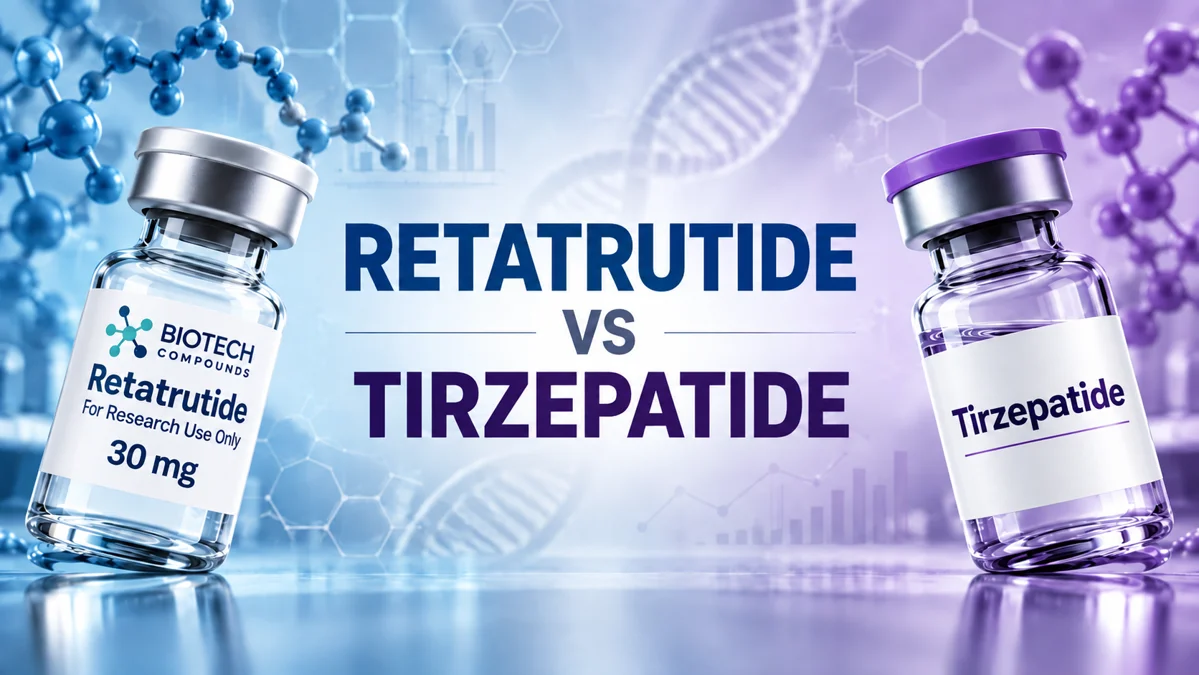
If you are researching Retatrutide vs Tirzepatide, the short answer is this: tirzepatide is the medication you can actually be evaluated for and, if appropriate, prescribed through a telehealth platform today. Retatrutide, sometimes shortened to Reta and occasionally called a "GLP3" or triple agonist because it engages three separate receptor pathways, is still moving through clinical development and is not yet something a licensed telehealth provider can prescribe. Both molecules were built to go further than older single-target medications by acting on GLP-1 and GIP receptors, and Retatrutide adds a third target, the glucagon receptor. Understanding what each pathway does, what the research suggests so far, and what is realistically available to you right now can help you make a grounded decision instead of chasing a headline.
Retatrutide vs Tirzepatide: What Each Medication Actually Targets
Tirzepatide is a dual agonist. It activates both the GIP receptor and the GLP-1 receptor, which work together to slow gastric emptying, reduce appetite signals in the brain, and improve how the body manages blood sugar. This dual mechanism is part of why tirzepatide has been studied so extensively for both weight management and blood sugar control.
Retatrutide goes a step further by adding a third receptor target, the glucagon receptor, on top of GLP-1 and GIP. Glucagon receptor activity is associated with increased energy expenditure and effects on liver fat metabolism, which is why some researchers refer to Retatrutide informally as a triple-G or GLP3 style agonist. In theory, hitting three metabolic pathways instead of two could produce a stronger effect on weight and metabolic markers, and early trial data has generated a lot of interest. But more receptor targets also means more variables to study for long term safety, which is one reason Retatrutide has not moved through the approval process as quickly as tirzepatide did.

Retatrutide vs Tirzepatide: Comparing the Two Head to Head
Here is a practical side by side look at where things stand as of late 2026. This is not a claim about which molecule is objectively superior; it reflects current availability, trial stage, and what has been reported in published research so far.
| Feature | Tirzepatide | Retatrutide (Reta) |
|---|---|---|
| Receptor targets | GIP and GLP-1 (dual agonist) | GIP, GLP-1, and glucagon (triple agonist) |
| Regulatory status | FDA-approved brand versions exist; compounded versions may be prepared by licensed pharmacies for individual patients | Still in clinical trials; not FDA-approved in any form |
| Available through telehealth evaluation | Yes, after a licensed provider reviews your health profile | No, not through any licensed telehealth pathway as of October 2026 |
| Weight loss reported in trials | Roughly 15 to 20 percent of body weight at higher doses in major published trials | Reported around 24 percent at the highest dose in its phase 2 trial, though phase 3 data is still being evaluated |
| Typical dosing | Once weekly subcutaneous injection, gradually titrated | Once weekly subcutaneous injection in trials, gradually titrated |
| How people currently access it | Prescription following provider evaluation, compounded medication shipped by a licensed pharmacy | Not available as a prescription; some vendors sell it labeled as a research compound, not for human use |
What the Clinical Trial Data Actually Shows
It helps to separate what has been established from what is still emerging. Tirzepatide has a substantial body of published trial data behind it, including large studies that followed participants for well over a year. Many patients in those trials lost a meaningful percentage of body weight, and the medication has also been studied for effects on blood sugar, blood pressure, and other metabolic markers. Because it has been through the full approval process for its branded form, providers and pharmacists have a strong evidence base to draw from when discussing expected effects and side effects.
Retatrutide's data is earlier stage. The phase 2 results that generated so much attention showed strong average weight reduction, and researchers are watching closely to see whether phase 3 trials, which involve far more participants over longer periods, confirm those early numbers and clarify the safety profile. Early results in a smaller trial do not always hold up exactly the same way in a larger, more diverse population, which is a normal and expected part of drug development. This is not a reason to dismiss Retatrutide's potential, but it is the reason no licensed provider can prescribe it yet.
Why Retatrutide Isn't Available Through Telehealth Yet
Licensed telehealth platforms like Biotech Lifestyle can only connect patients with providers who prescribe medications that have an appropriate regulatory pathway, whether that is an FDA-approved branded product or a compounded version prepared by a licensed pharmacy using ingredients that meet pharmacy compounding standards. Retatrutide has not reached FDA approval, and it has not been added to the lists that allow compounding pharmacies to prepare it for individual patients under a valid prescription. Until that changes, no legitimate telehealth provider will be able to prescribe it, regardless of how promising the trial data looks.
This is different from tirzepatide, which has both an approved branded form and a pathway for licensed pharmacies to prepare compounded tirzepatide, often combined with B12, for patients who have been evaluated and prescribed by a licensed provider. If you want to read more about how Retatrutide trials have looked at joint health alongside weight loss, our deeper dive on Retatrutide for weight loss and joint health covers that angle in more detail.

Retatrutide as a Research Compound: What That Actually Means
Because Retatrutide is not yet approved or available through any prescription pathway, some suppliers sell it labeled as a research compound intended for laboratory use rather than human consumption. One example is BiotechCompounds.com, which lists Retatrutide under a product labeled GLP-3R for research purposes. It is important to understand what that label actually means. Research compounds sold this way are not evaluated by the FDA, are not produced under the same quality and sterility standards required for compounded prescription medications, and are not intended, marketed, or sold for use in humans.
Biotech Lifestyle does not prescribe, sell, or endorse using research compounds outside of a licensed medical evaluation. Products sold this way come with no medical supervision, no dosing guidance from a provider who knows your health history, and no assurance about purity or contamination. If you are drawn to Retatrutide because of its early trial results, the safer path is to work with a licensed provider on a medication that is currently available, such as compounded tirzepatide, while keeping an eye on Retatrutide's progress through the approval process.
Tirzepatide Through Biotech Lifestyle: How the Process Actually Works
Starting the process is simpler than most people expect. You do not need a referral from another doctor. Creating your online health profile is free, and it takes just a few minutes to share your health history and weight loss goals. A licensed provider reviews your information and, if tirzepatide or another treatment is appropriate for you, writes a prescription that a licensed compounding pharmacy fills and ships directly to your door.
Pricing is listed up front before you commit to anything, so there are no surprise fees once you are already invested in the process. You pay directly for your treatment, and Biotech Lifestyle accepts HSA and FSA cards, which can make it easier to manage the cost using funds you have already set aside. You can browse the weight loss medication options or look specifically at the tirzepatide product page to see what a typical treatment plan looks like before you start your profile.
Making the Choice That Fits Your Health Goals Right Now
If your priority is starting a medically supervised weight loss plan today, tirzepatide is the realistic option, and it has years of published research behind it along with an established compounding pathway. If you are specifically hoping for Retatrutide because of its triple receptor mechanism, the honest answer is that you will need to wait for it to complete clinical trials and gain regulatory approval before any licensed provider can prescribe it to you. Trying to substitute an unregulated research compound for a supervised prescription is not a safe shortcut, no matter how compelling the early data looks.
Many patients who start with tirzepatide report steady, gradual progress toward their goals over several months, paired with support around nutrition and activity. That combination, medication plus lifestyle changes, tends to matter more for long term results than which specific receptor combination a medication targets. You can also browse weight loss treatments to compare tirzepatide against other current options like semaglutide if you want a fuller picture before deciding.
Your Next Step Toward a Realistic Weight Loss Plan
Comparing Retatrutide vs Tirzepatide is a useful exercise, but it should not delay action if you are ready to start addressing your weight today. Tirzepatide, prescribed after a licensed provider evaluates your health profile and prepared by a licensed compounding pharmacy, is available right now, and getting started does not require a referral or an insurance authorization. The first step is simply completing your free health profile so a provider can determine whether it is an appropriate option for you.
When you are ready, you can start a consultation through the intake form and get a clear picture of pricing, dosing, and what to expect before you commit to anything.